
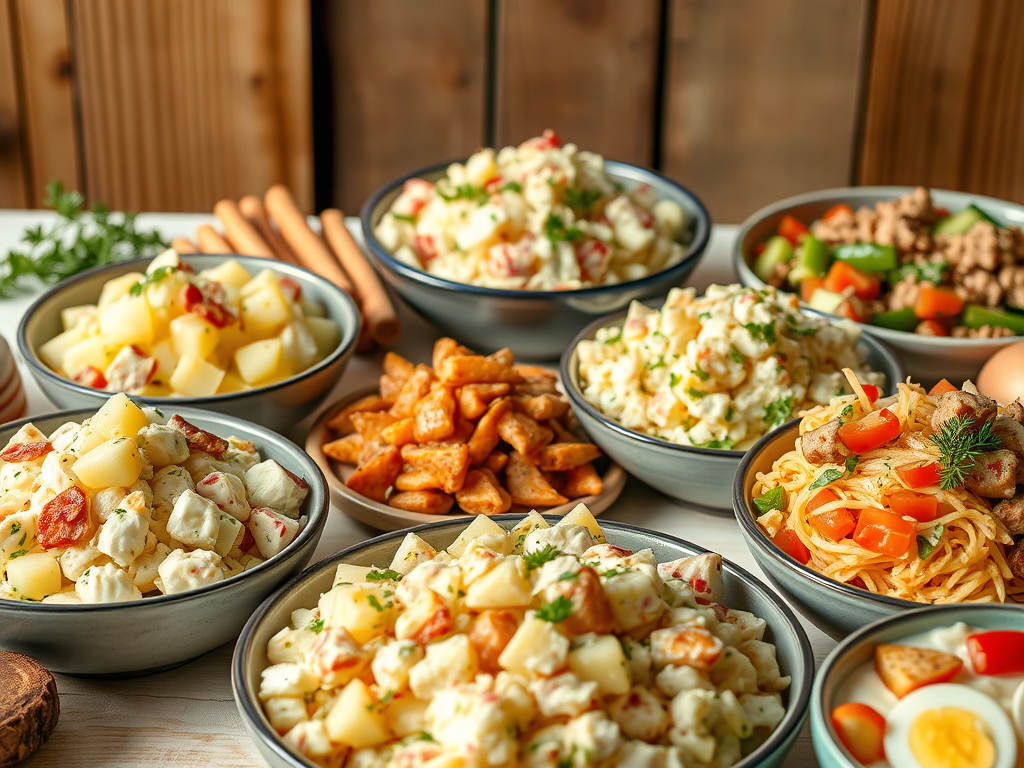

Potato salad has a fascinating history that spans continents and cultures. The basic concept of combining boiled potatoes with other ingredients emerged in Europe during the 16th century. This occurred particularly in Germany after potatoes were introduced from the Americas.
The German-style potato salad (Kartoffelsalat) was typically made with a vinegar-based dressing rather than mayonnaise, and was often served warm. This style featured bacon, onions, and mustard, reflecting the hearty nature of German cuisine. When German immigrants came to America, they brought these recipes with them, particularly to regions like Pennsylvania and the Midwest.
The American-style potato salad we’re most familiar with today features mayonnaise. It emerged in the late 19th century after commercial mayonnaise became widely available. This version typically includes celery, onions, hard-boiled eggs, and various seasonings. The popularization of potato salad in America coincided with the rise of picnics and outdoor gatherings during the Victorian era.
Different regions and cultures have developed their own variations:
- Russian potato salad (Olivier salad) includes diced boiled potatoes, vegetables, eggs, meat, and mayonnaise
- Japanese potato salad features uniquely Japanese ingredients like rice vinegar and sometimes rice
- Southern American versions often incorporate sweet pickle relish and mustard
- Mediterranean variations might use olive oil instead of mayonnaise and include regional herbs
The dish became particularly popular during the mid-20th century with the rise of casual entertaining and backyard barbecues. Its ability to be made ahead and serve a crowd made it a staple of American picnic and potluck culture. Today, potato salad remains a beloved side dish worldwide, with countless regional and family variations passed down through generations.
The evolution of potato salad also reflects broader changes in food preservation, preparation, and cultural exchange. Its endurance as a popular dish speaks to its versatility and ability to adapt to different tastes and dietary preferences.
Regional influence
Let me explain how potato salad varies across different regions. I will showcase how local ingredients have shaped this versatile dish. Cultural preferences also play a role.
GERMANY The original German potato salad is particularly popular in the southern regions like Bavaria. It is distinctly different from the American version. It’s usually served warm and relies on a vinegar-based dressing rather than mayonnaise. Regional variations exist even within Germany:
- Northern Germany tends to use mayonnaise more frequently
- Southern Germany typically sticks to the traditional oil and vinegar dressing
- Hamburg style includes apple and herring
UNITED STATES American regional variations are particularly diverse:
- Southern states often add sweet pickle relish, yellow mustard, and extra eggs
- Mid-Atlantic regions, influenced by German immigrants, sometimes prefer hot bacon dressing
- New England versions might include lobster or seafood seasonings
- Midwest recipes often feature more eggs and celery, reflecting farm-fresh ingredients
- Hawaiian potato salad commonly includes macaroni, reflecting the islands’ love of pasta salads
JAPAN Japanese potato salad (ポテトサラダ) has become a distinct style that reflects Japanese tastes:
- Potatoes are mashed more finely
- Includes thinly sliced cucumber, carrots, and sometimes apple
- Uses Japanese mayonnaise (Kewpie) which is richer and tangier
- Often incorporates rice vinegar for seasoning
RUSSIA Russian Olivier salad, while technically a potato salad, has evolved into its own distinct dish:
- Includes diced boiled potatoes, carrots, eggs, pickles, peas, and meat
- Uses a specific dicing technique where all ingredients are cut into uniform, small cubes
- Has become a traditional New Year’s dish across former Soviet states
SCANDINAVIA Nordic countries have their own interpretations:
- Swedish versions often include beets and pickled herring
- Danish potato salad might include fresh apples and crispy fried onions
- Norwegian varieties sometimes incorporate smoked fish or dill
MEDITERRANEAN Mediterranean countries adapt potato salad to their culinary traditions:
- Greek versions often use olive oil, lemon juice, and fresh herbs like oregano
- Spanish potato salad (ensaladilla rusa) includes tuna and olives
- Italian variations might incorporate capers, olive oil, and fresh basil
These regional differences reflect not just taste preferences. They also show local ingredient availability. Climate considerations play a role, such as mayonnaise versus vinegar in warmer regions. Additionally, they reflect cultural food traditions. The adaptability of potato salad has allowed it to become a truly global dish while maintaining distinct local character.
Easy recipe for Potato Salad:
Here’s a straightforward, classic potato salad recipe that’s hard to mess up:
INGREDIENTS
- 2 pounds red or Yukon Gold potatoes
- 4 large eggs
- 1 cup mayonnaise
- 2 tablespoons yellow mustard
- 1 celery stalk, finely diced
- 1/2 medium onion, finely diced
- 1/4 cup sweet pickle relish (optional)
- Salt and pepper to taste
INSTRUCTIONS
- Start with the potatoes:
- Cut potatoes into 1-inch cubes (no need to peel)
- Place in pot, cover with cold water and add 1 teaspoon salt
- Bring to boil, then reduce to simmer for 10-15 minutes until tender but not mushy
- Test with a fork – it should slide in easily
- Drain and let cool
- While potatoes cook, make hard-boiled eggs:
- Place eggs in pot with cold water
- Bring to boil, then remove from heat
- Cover and let sit for 12 minutes
- Transfer to ice bath, peel and chop when cool
- Make the dressing:
- Mix mayonnaise and mustard in a large bowl
- Add celery, onion, and pickle relish if using
- Season with salt and pepper
- Combine:
- Add cooled potatoes and eggs to the dressing
- Gently fold everything together
- Taste and adjust seasoning
- Chill for at least 2 hours before serving
PRO TIPS:
- Start potatoes in cold water for even cooking
- Don’t overcook the potatoes – they should hold their shape
- Season the cooking water for better-tasting potatoes
- Toss potatoes with a little vinegar while still warm for extra flavor
- Taste and adjust seasoning just before serving, as potatoes absorb salt while chilling
This makes about 6-8 servings and keeps well in the fridge for 3-4 days.
 D'Lightful Dishes LLC, Personal / Private Chef Services