

Happy New Year 2025!!! Here are a few traditions that are for Luck and Money.
Black Eye Peas:
The tradition of eating black-eyed peas on New Year’s Day is primarily linked to the Southern United States. It is believed to bring good luck and prosperity for the coming year. This custom has deep historical roots:
Historical Origins:
- The practice dates back to the American Civil War, when black-eyed peas were one of the few crops left behind by Union soldiers who considered them animal feed
- The tradition has earlier connections to West African and Jewish customs, reflecting the diverse cultural influences in Southern cuisine
Traditional Preparation: The most common New Year’s preparation is “Hoppin’ John,” which typically includes:
- Black-eyed peas cooked with ham hock or bacon
- Rice
- Collard greens (representing money)
- Cornbread (representing gold)
Symbolism:
- The peas themselves are said to represent coins
- Their swelling when cooked represents growing prosperity
- Some traditions suggest eating 365 peas, one for each day of good luck in the coming year
The tradition has spread beyond the South. It is now practiced by many Americans of various backgrounds as a New Year’s Day ritual. Some families add a penny or dime to the pot of peas while cooking. The person who finds the coin in their serving is said to receive extra good luck.
Even today, many grocery stores across the United States stock up on black-eyed peas in late December. They do this to meet the holiday demand.
Here’s a classic Southern-style recipe for black-eyed peas:
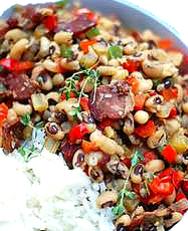
Ingredients:
- 1 pound dried black-eyed peas
- 1 large onion, diced
- 2-3 cloves garlic, minced
- 1 ham hock or 6 slices bacon (optional)
- 2 bay leaves
- 8 cups chicken broth or water
- Salt and pepper to taste
- 1 tablespoon olive oil
- Optional: diced jalapeño or hot sauce for heat
Instructions:
- Sort and Soak:
- Sort through peas to remove any stones or debris
- Soak peas overnight in cold water, or quick-soak by bringing to boil for 2 minutes, then letting stand covered for 1 hour
- Drain and rinse
- Prepare Base:
- Heat oil in a large pot over medium heat
- If using bacon, cook until crisp, remove and crumble
- Sauté onions in the same pot until translucent (about 5 minutes)
- Add garlic and cook for 1 minute more
- Cook Peas:
- Add peas, ham hock (if using), bay leaves, and broth
- Bring to a boil, then reduce to simmer
- Cook for 45-60 minutes or until peas are tender but not mushy
- Season with salt and pepper to taste
- Finish:
- Remove ham hock (if used) and strip any meat to add back to peas
- Add crumbled bacon back if using
- Adjust seasoning
Serving Suggestions:
- Serve over rice for traditional Hoppin’ John
- Accompany with cornbread and collard greens
- Top with fresh diced onions or hot sauce if desired
The peas should be creamy but still hold their shape. The cooking liquid should be rich and flavorful – don’t drain it off!
Collard Greens:
Collard greens are another crucial part of traditional New Year’s Day meals, particularly in the American South. Their connection to the New Year is rich with symbolism and history:
Symbolism: The deep green color of collard greens symbolizes money and financial prosperity. The flat leaves are said to represent paper money or dollar bills. This makes them a natural complement to black-eyed peas, which represent coins, in New Year’s meals.
Traditional Preparation:
- Usually slow-cooked with smoked meat (ham hock, bacon, or salt pork)
- Often seasoned with onions, garlic, and pepper
- Traditionally cooked until very tender
- The resulting cooking liquid (known as “pot likker” or “pot liquor”) is considered nutritious and flavorful
Historical Significance:
- Collards were one of the few crops enslaved people were allowed to grow and cook for themselves in the American South
- Like black-eyed peas, collards were hardy plants that could survive harsh conditions
- The tradition of eating them on New Year’s Day became firmly established during the Civil War era
Modern Practice: Today, many Southern families maintain this tradition. Restaurants across the South frequently offer special New Year’s Day menus that feature collard greens. The practice has spread beyond the South. Many Americans have adopted this tradition for good fortune in the coming year.
Health Benefits: Interestingly, starting the year with collard greens is actually quite beneficial for health as they are:
- Rich in vitamins K, A, and C
- High in fiber
- Packed with antioxidants
- Contains calcium and iron
These traditions have Southern roots and are still carried out to this day. Luck and Money for all of 2025.

