

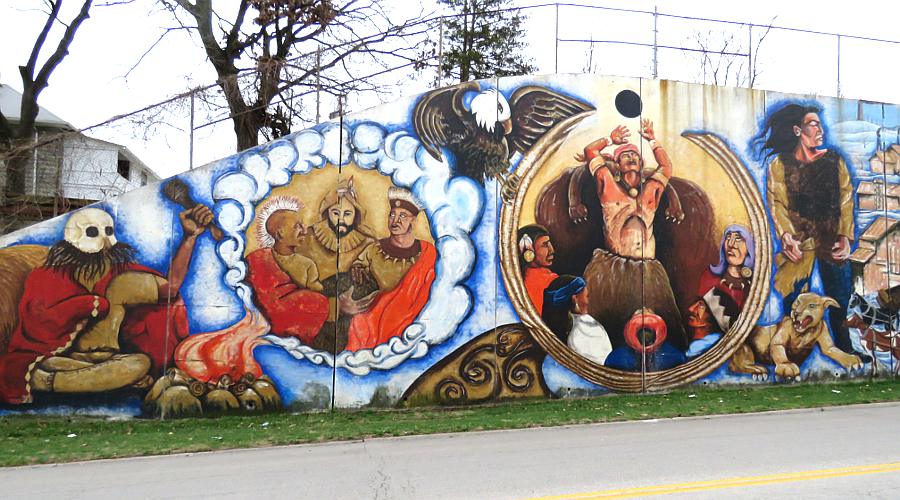
Let me share the history of Mexican settlement in Kansas City, Kansas. It is a significant part of the city’s cultural & culinary fabric.
The Mexican immigration to Kansas City, KS began in earnest in the early 1900s, primarily driven by two major factors:
- Railroad Employment: The first major wave of Mexican immigrants came to work for railroad companies. They worked particularly for the Atchison, Topeka & Santa Fe Railroad and the Union Pacific Railroad. These companies actively recruited workers from Mexico, especially during World War I when there was a labor shortage.
- Meatpacking Industry: The second significant draw was the thriving meatpacking industry in the Armourdale and Argentine districts. Companies like Armour and Swift provided employment opportunities for Mexican immigrants.
The earliest Mexican settlements in KCK were concentrated in specific neighborhoods:
- Argentine District: One of the first Mexican-American neighborhoods, developed around railroad work
- Armourdale: Grew around the meatpacking plants
- Mexican Hill: Located in the area now known as the Rosedale neighborhood
Central Ave and Mexican Influence:
Central Avenue in Kansas City, Kansas has functioned as a vital corridor. This area has supported Mexican-American culture and business since the early 20th century. Here’s a detailed look at its significance:
Historical Development:
- By the 1920s, Central Avenue became a main commercial strip for the Mexican-American community
- The area between 10th and 18th Streets developed as a particularly important Mexican business district
- Many buildings from the early 1900s still stand, preserving the historic character
Business Development:
- Early businesses included:
- Small grocery stores (tiendas)
- Pool halls and social clubs
- Mexican restaurants
- Barbershops
- Music stores selling Mexican records
Cultural Landmarks:
- Bethel Neighborhood Center: Established in 1911, it served as a settlement house for immigrants
- Our Lady of Guadalupe Church: A center of community life since 1914
- Teatro Cervantes: An early theater that showed Spanish-language films
- Several mutual aid societies had their headquarters on Central Avenue
Modern Central Avenue:
- Remains a vibrant Latino business district
- Mix of old and new businesses including:
- Traditional Mexican restaurants
- Bakeries (panaderias)
- Grocery stores
- Retail shops
- Service businesses
Notable Current Features:
- Concentration of authentic Mexican restaurants
- Multiple carnicerias (meat markets)
- Street art and murals reflecting Mexican culture
- Annual cultural celebrations and festivals
- Mix of family-owned businesses passed down through generations
Recent Developments:
- Efforts to preserve historic buildings while encouraging new development
- Investment in streetscape improvements
- Growing recognition as a cultural destination
- New businesses continuing to open while maintaining the area’s Mexican-American character
These communities established important cultural institutions:
- Our Lady of Guadalupe Church: Founded in 1914, it became the first Mexican Catholic church in Kansas City and remains a vital cultural center
- Mexican businesses: Small grocery stores (tiendas), restaurants, and other businesses began appearing in the 1920s
- Mutual aid societies: Organizations like Sociedad Morelos helped new immigrants adjust to life in Kansas City
The Mexican-American community faced significant challenges during the Great Depression. During this period, many were pressured to return to Mexico through “repatriation” programs. However, many families remained and established deep roots in the community.
The post-World War II era witnessed the continued growth of the Mexican-American population in KCK. New waves of immigration contributed to this growth. There was also an expansion of existing communities. Today, the Mexican-American community is a crucial part of Kansas City, Kansas. Their influence is visible in the city’s culture, food, business community, and civic life.
The Argentine district in Kansas City, Kansas has a rich history deeply connected to both railroad development and Mexican immigration. Let me break down its significant history:
Early Development (Late 1800s):
- The district was originally founded in 1880 and named after a silver smelting plant (reflecting the Spanish word for silver, “plata”)
- The district was incorporated as its own city in 1881 before being annexed by Kansas City, Kansas in 1910
- The Santa Fe Railroad established major operations there, making it a crucial railway hub
Mexican Immigration (Early 1900s):
- Mexican workers began arriving in significant numbers around 1905-1910
- The Santa Fe Railroad actively recruited workers from Mexico, offering them housing in railroad boxcars initially
- Many workers lived in an area known as “La Colonia,” one of the earliest Mexican settlements in the district
Community Development:
- Families gradually moved from boxcars to small houses they built or rented
- Strong family networks developed as established families helped new arrivals
- Local businesses emerged to serve the community, including grocery stores, barber shops, and restaurants
Cultural Institutions:
- Our Lady of Mt. Carmel Catholic Church became a central institution for the Mexican community
- The Argentine Community Center provided social services and gathering spaces
- Local mutual aid societies helped community members with everything from funeral expenses to job placement
Challenges:
- The community faced discrimination in housing and employment
- The 1951 flood devastated much of Argentine, but the community rebuilt
- Economic challenges increased when railroad operations decreased in later decades
Modern Argentine:
- The district retains strong Hispanic cultural influences
- Many families are now fourth or fifth generation Argentine residents
- The area has seen recent revitalization efforts while maintaining its cultural heritage
- The Argentine Industrial District continues to be an important economic zone
The Mexican food influence in Kansas City, Kansas, particularly in the Argentine district and surrounding areas, has a fascinating history. It continues to shape the local culinary landscape.
Early Food Establishments (1920s-1940s):
- Small family-run tortillerías began appearing, making fresh tortillas for the community
- Early taquerías operated out of homes, serving workers from the railroads and meatpacking plants
- Mobile vendors (similar to modern food trucks) would sell tamales and other Mexican foods to workers during shift changes
Notable Historical Establishments:
- Ninfa’s: One of the earliest documented Mexican restaurants in Argentine, opened in the 1940s
- La Galena Market: An early Mexican grocery store that supplied traditional ingredients
- Taco Houses: Small stands that popularized Mexican food beyond the Mexican-American community
Traditional Influences That Shaped KCK Mexican Food:
- Many early recipes came from the central Mexican states of Guanajuato, Jalisco, and Michoacán
- Local adaptations developed based on available ingredients
- The combination of railroad and meatpacking work influenced hearty, portable dishes
Modern Impact:
- KCK’s Mexican food scene is known for:
- Traditional taquerias serving authentic street-style tacos
- Family restaurants preserving multi-generational recipes
- Markets like El Rio Bravo and Sun Fresh providing Mexican ingredients
- Popular establishments like GG’s Barbacoa & More, El Camino Real, and Carniceria y Tortilleria San Antonio
The influence extends beyond just Mexican restaurants:
- Local barbecue has incorporated Mexican flavors and techniques
- Fusion dishes have emerged combining Mexican cuisine with local Kansas City traditions
- Mexican bakeries (panaderías) have introduced traditional Mexican breads and pastries
- Local grocery stores now commonly stock Mexican ingredients and products
Let me share some of the notable Mexican food establishments in Kansas City, Kansas that have made significant cultural and culinary contributions:
Long-Standing Historical Establishments:
- El Camino Real (Metropolitan Avenue)
- Operating since 1968
- Known for traditional Mexican breakfast dishes and handmade tortillas
- Family-owned for multiple generations
- Famous for their chile rellenos and menudo
- San Antonio Carniceria y Tortilleria (Kansas Avenue)
- Started as a small meat market in the 1990s
- Evolved into a combination market/restaurant
- Known for their fresh tortillas made daily
- Popular for their tacos al pastor and meat counter
Current Notable Restaurants:
- GG’s Barbacoa & More (Central Avenue)
- Specializes in traditional barbacoa
- Known for their consomé and handmade salsas
- Weekend-only specials that draw crowds
- Bonito Michoacan (Central Avenue)
- Full-service Mexican restaurant and market
- Known for their extensive menu of authentic dishes
- Popular for their seafood dishes and aguas frescas
- El Pollo Rey (Kansas Avenue)
- Famous for their charcoal-grilled chicken
- Simple menu but extremely popular
- Known for their special marinade recipe
Markets and Specialty Shops:
- El Rio Bravo Supermercado (Metropolitan Avenue)
- Large Mexican grocery store
- Fresh produce, meat counter, and prepared foods
- In-house bakery making traditional Mexican pastries
- Carniceria y Tortilleria San Antonio (Kansas Avenue)
- Known for their meat selection
- Fresh tortillas made throughout the day
- Small restaurant inside serving tacos and burritos
Local Panaderias (Bakeries):
- Panaderia Reyna (Central Avenue)
- Traditional Mexican sweet breads
- Special holiday offerings
- Known for their conchas and bolillos
Kansas City’s Mexican influence on the food scene is unmatched. They bring a unique culture and flavor to all of Kansas City.
 D'Lightful Dishes LLC, Personal / Private Chef Services