
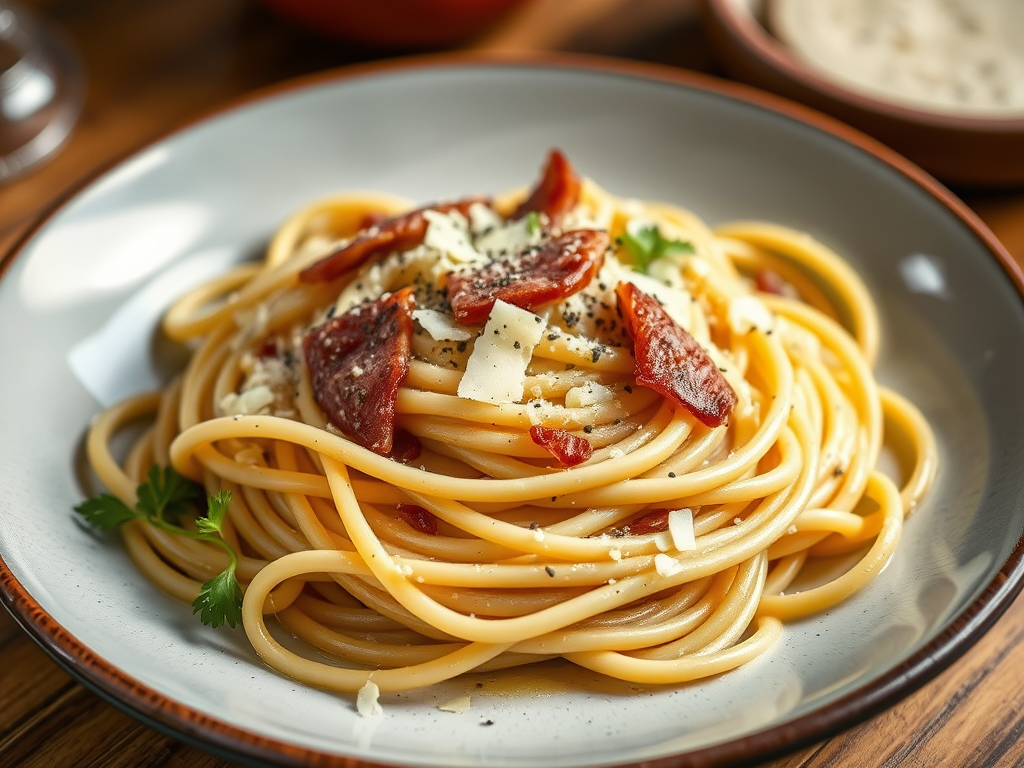
Carbonara is an easy Italian dish. It can be a meat dish. With some vegetable substitutes, it becomes an easy Vegan/Vegetarian dish. It is an easy dish to cook and can be very satisfying to eat. The history of Carbonara is surprisingly recent and highly debated among food historians. Despite its reputation as a classic Italian dish, Carbonara has no ancient origins.
The First Documented Recipe The first published carbonara recipe appeared in Italy in 1954 in La Cucina Italiana magazine. It featured Pancetta, garlic, and Gruyère cheese. This version was quite different from today’s traditional version. Today, it includes Guanciale, eggs, Pecorino, and black pepper. ITALY Magazine.
Origin Theories The dish’s true origins remain mysterious, with several competing theories:
World War II Theory: The most widely accepted theory suggests Carbonara originated when Allied forces arrived in Rome in 1944. A cook combined American army rations, likely bacon and eggs, with local Italian ingredients. This would explain why the dish only appears in written records after the war.
Charcoal Workers Theory: Some historians propose the dish was created by Italian ‘carbonari’ (charcoal workers). They prepared it over fires in the Apennine mountains between Lazio and Abruzzo. The Origins Of Carbonara – Great British Chefs. According to this theory, the black pepper resembles the soot that would stain charcoal burners Carbonara: history and recipe of a famous Roman dish – Eat and Walk Italy.
Evolution from Older Dishes: Some connect carbonara to “cacio e uova,” a Neapolitan dish. This dish consists of pasta with melted lard, beaten eggs, and cheese. Carbonara: Origins and Anecdotes of the Beloved Italian Pasta Dish – La Cucina Italiana.
What’s Clear Food historians emphasize that there are no ancient progenitors of carbonara. Stories of humble shepherds or charcoal miners making it “from the mists of time” are fascinating but unhistorical. Carbonara: history, origins and anecdotes – Gambero Rosso International. The dish is most strongly associated with Rome and the Lazio region Carbonara: Origins and Anecdotes of the Beloved Italian Pasta Dish – La Cucina Italiana, and its modern form likely emerged sometime in the mid-20th century.
The passionate debates over carbonara’s origins reflect how quickly this relatively new dish became deeply embedded in Italian culinary identity.
Easy Carbonara Recipe
Ingredients (serves 2-3):
- 300g spaghetti or tonnarelli
- 150g guanciale (or pancetta if unavailable), diced
- 3 large egg yolks + 1 whole egg
- 80g Pecorino Romano cheese, finely grated
- Freshly ground black pepper
- Salt for pasta water
Instructions:
- Prep the sauce: In a large bowl, whisk together the eggs, grated pecorino, and a generous amount of black pepper. Set aside.
- Cook the guanciale: In a large pan, dice the guanciale. Cook it over medium heat until crispy and golden. This will take about 5-7 minutes. Don’t add oil – the fat will render out. Keep warm.
- Cook the pasta: Boil salted water and cook pasta until al dente (about 1 minute less than package directions).
- Combine: Reserve 1 cup of starchy pasta water before draining. Add the hot, drained pasta directly to the pan with guanciale.
- Create the cream: Remove pan from heat. Quickly add the egg mixture while tossing the pasta vigorously. Add pasta water gradually (start with 2-3 tablespoons) while tossing until you get a creamy, silky sauce that coats each strand.
- Serve: Plate immediately with extra pecorino and black pepper.
Key Tips:
- The pan should be off the heat when adding eggs to prevent scrambling
- Work quickly and keep tossing to create the creamy emulsion
- The starchy pasta water is crucial for binding the sauce
- Never add cream, garlic, or peas – it’s not traditional Carbonara!
- To make it vegan friendly add mushrooms in place of meat.
The whole process takes about 15 minutes and creates a restaurant-quality dish with just a few simple ingredients.
 D'Lightful Dishes LLC, Personal / Private Chef Services