

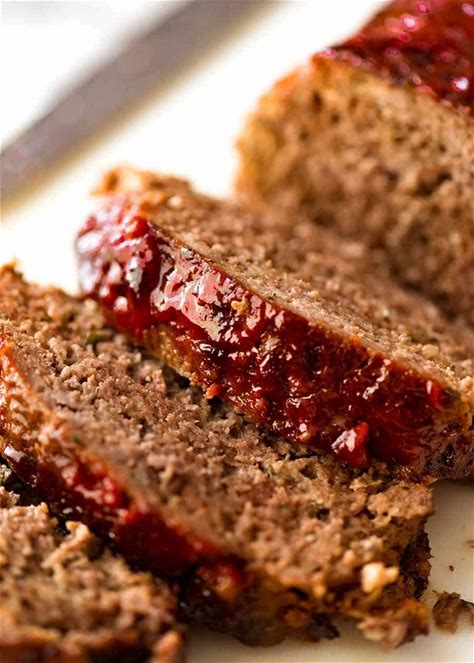
Meatloaf is the ultimate comfort food. I can eat it at least twice a week. It can be made one day and enjoyed for days to come. It can be a meatloaf sandwich, meatloaf spaghetti, or just heated up and eaten with new sides.
I absolutely love meatloaf, because of the different flavors that can be added. I’ve had it in a slow cooker, on a grill/smoker, and the most popular way in the oven. Many sides go so good with meatloaf; mashed potatoes, rice, green beans, mac and cheese, or greens (to make it more southern and comforting),
The history of meatloaf stretches back much further than many people realize. While often meatloaf is linked to American comfort food of the 20th century, its origins are actually quite ancient.
Ancient origins:
- Early forms of meatloaf date back to the 5th century Roman cookbook “Apicius.” It included recipes for patties made of chopped meat mixed with spices. Bread soaked in wine and pine nuts were also used.
- Similar dishes appeared throughout Europe during the Medieval period, with variations that combined ground meat with fruits, nuts, and spices.
European heritage:
- German immigrants brought various meat dishes like Scrapple (pork scraps mixed with cornmeal and spices) to colonial America.
- The Pennsylvania Dutch had similar dishes that evolved from the German “Hackbraten” or minced roast.
American evolution:
- Meatloaf became popular in America during the Great Depression. It was also popular during World War II. It served as an economical way to stretch meat with inexpensive fillers.
- The 1918 cookbook “Foods That Will Win the War” promoted meatloaf. It was a way to extend limited meat supplies during wartime rationing.
- The first recorded American meatloaf recipe appeared in the late 1870s, though it was quite different from modern versions.
Mid-20th century popularity:
- The 1950s saw meatloaf become a staple of American home cooking, featured in countless cookbooks and women’s magazines.
- Betty Crocker’s cookbook helped standardize the modern American meatloaf recipe with ingredients like ketchup and breadcrumbs.
Modern interpretations:
- In recent decades, meatloaf has been re-imagined by chefs. They have created gourmet versions with ingredients like mushrooms, cheeses, and exotic spices.
- Vegetarian and vegan meatloaves using plant-based proteins have become popular alternatives.
Today, meatloaf remains a beloved comfort food. It has transcended its humble origins as an economical dish. Now, it is a culinary classic with countless regional and international variations.
Meatloaf has many regional variations across the United States and around the world. Here are some notable regional styles:
United States Regional Variations:
- Southern-style: Often includes a mixture of beef and pork, with cornbread crumbs instead of white bread. May include ingredients like green bell peppers and a sweet tomato or barbecue topping.
- New England: Typically features a higher ratio of ground beef and often includes maple syrup in the glaze or mix. Sometimes wrapped in bacon.
- Pennsylvania Dutch: Includes a mixture of ground beef, pork, and veal with distinctive spices like allspice, cloves, and nutmeg.
- Midwest: Known for “inside-out” meatloaves with cheese stuffed in the center, or slices of hard-boiled eggs embedded within.
- Southwestern: Incorporates chiles, cumin, and often uses crushed tortilla chips as binder instead of breadcrumbs. May include corn and black beans.
- Cajun/Creole: Features the “holy trinity” of bell peppers, onions, and celery, with Cajun seasoning and sometimes andouille sausage mixed in.
International Variations:
- British meat pies: Similar concept but enclosed in pastry.
- German Falscher Hase (“false hare”): Includes hard-boiled eggs in the center to resemble a rabbit’s light-colored belly when sliced.
- Danish Forloren Hare: Similar to German version but often topped with bacon and served with lingonberry jam.
- Chilean Pastel de Carne: Features olives, hard-boiled eggs, and raisins baked inside.
- Greek Keftedes: A smaller version shaped into flat patties with Mediterranean seasonings like mint and oregano.
- Filipino Embutido: Contains hard-boiled eggs, raisins, and sometimes cheese, wrapped in banana leaves and steamed.
- Czech Sekaná: Often mixed with caraway seeds, marjoram, and garlic, sometimes incorporating smoked meat.
- South African Bobotie: A curried meat dish with an egg topping, considered by some to be a cousin of meatloaf.
These regional variations show local ingredients, cultural influences, and culinary traditions, making meatloaf a truly international dish with endless interpretations.
Simple Meatloaf Recipe
Ingredients:
- 2 pounds ground beef (80/20 lean-to-fat ratio)
- 1 cup bread crumbs
- 1 small onion, finely diced
- 2 eggs, beaten
- 1/4 cup ketchup
- 1 teaspoon dried oregano
- 1 teaspoon dried basil
- 2 cloves garlic, minced
- 1 teaspoon salt
- 1/2 teaspoon black pepper
For the topping:
- 1/2 cup ketchup
- 2 tablespoons brown sugar
- 1 tablespoon vinegar (white or apple cider)
Instructions:
- Preheat your oven to 350°F (175°C).
- In a large bowl, combine all the meatloaf ingredients: ground beef, bread crumbs, diced onion, beaten eggs, ketchup, oregano, basil, garlic, salt, and pepper.
- Mix gently with your hands until just combined. Don’t overmix or the meatloaf can become tough.
- Shape the mixture into a loaf and place it in a loaf pan or on a baking sheet.
- In a small bowl, mix the topping ingredients: ketchup, brown sugar, and vinegar.
- Spread the topping mixture evenly over the meatloaf.
- Bake for approximately 1 hour to 1 hour and 15 minutes, or until the internal temperature reaches 160°F (71°C).
- Let the meatloaf rest for about 10 minutes before slicing and serving.
 D'Lightful Dishes LLC, Personal / Private Chef Services