
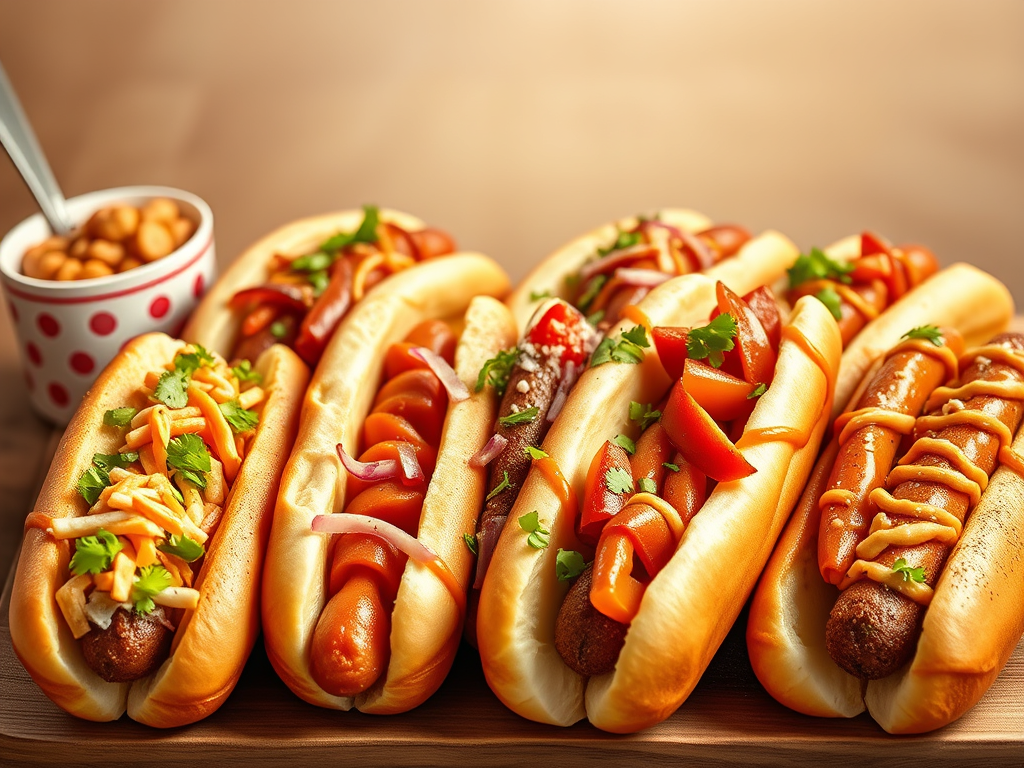

Hot dogs are a major part of American food culture:
Hot dogs can be found in almost every place in the world. They are available at gas stations, restaurants (specifically for hot dogs), on the streets, and in ball parks. They can be fried, boiled, broiled, grilled, and smoked. the possibilities of your hot dog imagination are truly limitless.
Sales/Consumption:
- Americans consume 20 billion hot dogs annually
- Peak consumption during summer (7 billion between Memorial and Labor Day)
- MLB stadiums sell ~20 million hot dogs per season
Economic Impact:
- $2.5+ billion in annual retail hot dog sales
- Part of $20+ billion processed meat industry
- Significant presence at sporting events, fairs, and casual dining
Cultural Status:
- Official food at many ballparks
- Nathan’s Hot Dog Eating Contest draws millions of viewers
- Featured at 95% of American cookouts/barbecues
- Staple street food in major cities
The hot dog evolved from German sausages. It includes the frankfurter (from Frankfurt) and the wiener (from Vienna). German immigrants brought these to America in the mid-1800s. Sausage vendors began serving them in buns in the 1870s, likely to protect customers’ hands from the hot sausages.
The term “hot dog” originated in the 1890s at baseball parks, possibly coined by sports cartoonist Tad Dorgan. German immigrants initially sold hot dogs from pushcarts in New York City’s Bowery neighborhood. The food gained widespread popularity at the 1893 Chicago World’s Fair, where they were sold as convenient, portable meals.
Hot dog vending became iconic in NYC from the late 1800s. German immigrants started selling from pushcarts in the Lower East Side and Bowery. Nathan’s Famous opened at Coney Island in 1916, becoming a landmark destination.
Key vendors shaped NYC hot dog culture:
- Nathan Handwerker (Nathan’s Famous)
- Sabrett hot dogs (blue and yellow umbrellas)
- Hebrew National vendors
- Gray’s Papaya and Papaya King
Today, street vendors maintain NYC’s hot dog tradition, with roughly 4,000 licensed vendors citywide. Many vendors are immigrants from the Middle East. Others are from South Asia and Latin America. They continue the tradition of immigrant entrepreneurship in street food.
Prices typically range $2-4 per hot dog, making them one of NYC’s most affordable street foods. Central Park, Times Square, and outside major museums remain popular vending locations.
German immigrants established hot dogs in American food culture during the 1800s through street vending and food carts. The evolution reflects different waves of immigration:
1860s-1900s:
- German vendors introduced frankfurters to NYC streets
- Jewish immigrants developed all-beef versions (kosher influences)
- Italian immigrants added their own toppings and spice blends
1900s-1940s:
- Greek and Macedonian immigrants created regional styles like Coney Islands
- Polish immigrants influenced sausage-making techniques
- Eastern European influences added sauerkraut and mustard traditions
Mid-1900s onward:
- Mexican immigration influenced Southwest styles (Sonoran hot dogs)
- Asian immigrants added fusion variations in West Coast cities
- Middle Eastern vendors incorporated new spice combinations
Each immigrant group adapted the basic hot dog to their culinary traditions, creating today’s diverse regional styles.
Here are notable regional hot dog styles in the US:
Chicago: An all-beef frank is topped with yellow mustard, onions, and sweet pickle relish. It also includes tomato slices, pickled sport peppers, and celery salt. A dill pickle spear is added on a poppy seed bun. No ketchup.
New York: All-beef dogs topped with spicy brown mustard and sauerkraut or onion sauce, often from street carts.
Detroit: Coney dog topped with chili, mustard, and diced onions.
Seattle: Cream cheese and grilled onions on a toasted bun.
New Jersey: Deep-fried “ripper” dogs with relish and mustard.
Rhode Island: New England-style bun with celery salt, onion, mustard, and meat sauce.
Arizona: Sonoran hot dog wrapped in bacon, topped with pinto beans, onions, tomatoes, and various Mexican condiments.
These regional variations emerged from local immigrant populations and cultural influences, particularly in the early-to-mid 20th century.
What is your favorite topping or establishment?
 D'Lightful Dishes LLC, Personal / Private Chef Services