
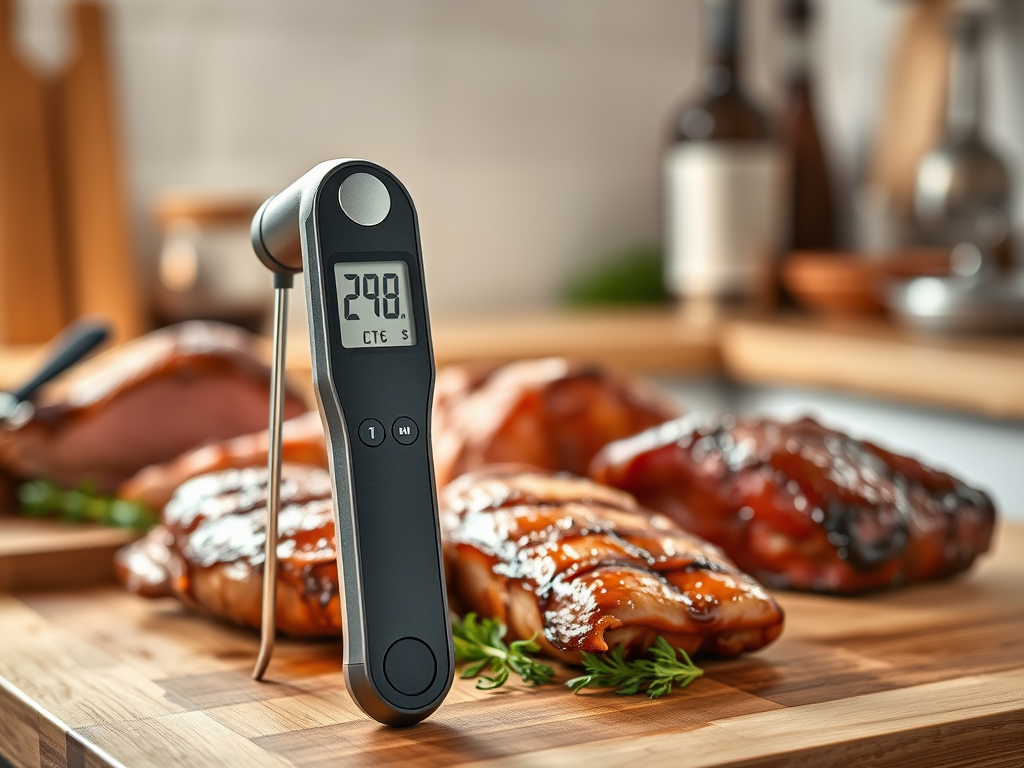
The most important tool of the trade in a chef or cook life is the thermometer. Why Food Thermometers Are Essential:
Food thermometers are essential tools in the kitchen. They provide the only reliable method to ensure food safety. They also help in achieving optimal cooking results. Visual cues like color or texture can be misleading. Meat can look “done” on the outside. Meanwhile, it remains dangerously undercooked inside.
Key Benefits
- Food Safety
- Prevents foodborne illness by confirming safe internal temperatures
- Eliminates guesswork in determining when food is safely cooked
- Particularly important for high-risk foods like poultry, ground meat, and seafood
- Quality Control
- Ensures consistent cooking results
- Prevents overcooking and food waste
- Helps achieve desired doneness levels for different meats
- Professional Standards
- Essential for commercial kitchens
- Meets health department requirements
- Demonstrates commitment to food safety
Critical Temperature Points
Minimum Safe Internal Temperatures
- Poultry (whole or ground): 165°F (74°C)
- Ground meats (beef, pork, lamb): 160°F (71°C)
- Fresh beef, veal, lamb (steaks, roasts): 145°F (63°C)
- Fish and shellfish: 145°F (63°C)
- Pork and ham: 145°F (63°C)
- Egg dishes: 160°F (71°C)
Danger Zone
- Between 40°F and 140°F (4°C – 60°C)
- Bacteria multiply rapidly in this range
- Food should not remain in this zone for more than 2 hours
Proper Usage Techniques
- Insertion Points
- Insert into thickest part of the food
- Avoid touching bone, fat, or gristle
- For thin items, insert sideways
- For whole poultry, check both thigh and breast
- Best Practices
- Clean and sanitize between uses
- Calibrate regularly
- Wait for reading to stabilize
- Check multiple spots in large items
- Don’t rely on built-in pop-up thermometers
Types of Food Thermometers
- Digital Instant-Read
- Fast response time
- Easy to read
- Most versatile option
- Good for thin and thick foods
- Thermocouple
- Professional grade
- Very fast readings
- Highly accurate
- More expensive
- Dial (Bi-metallic)
- Traditional style
- Slower response time
- Must be inserted deeper
- Better for thick foods
Maintenance and Care
- Cleaning
- Wash probe with hot soapy water
- Sanitize before each use
- Never submerge digital displays
- Store in clean, dry place
- Calibration
- Check accuracy monthly
- Use ice water method (32°F/0°C)
- Or boiling water method (212°F/100°C at sea level)
- Adjust as needed according to manufacturer instructions
Common Mistakes to Avoid
Using damaged or inaccurate thermometers
Not using a thermometer at all
Relying on touch or visual cues
Improper placement of the probe
Not cleaning between uses
Forgetting to calibrate
When choosing a cooking thermometer, consider these key factors:
Types of Thermometers:
- Instant-read digital thermometers: Quick, accurate readings for meats and other foods
- Probe thermometers: Can stay in food during cooking, with external digital display
- Infrared thermometers: Measure surface temperature without contact
Key Selection Criteria:
- Accuracy (±1-2°F is ideal)
- Temperature range
- Response time
- Durability
- Ease of cleaning
- Digital display readability
- Battery life
Recommended Features:
- Waterproof design
- Auto shut-off
- Preset temperature settings for different foods
- Backlit display
- Calibration capability
Best Uses:
- Meat: Check internal temperature for doneness
- Baking: Verify precise oven and ingredient temperatures
- Candy/deep frying: Monitor oil temperature
- Grilling: Ensure food safety and optimal cooking
Top Tip: Invest in a reliable digital instant-read thermometer for most home cooking needs, prioritizing accuracy and quick readings.
 D'Lightful Dishes LLC, Personal / Private Chef Services