
Essential Guide to Braising Meat
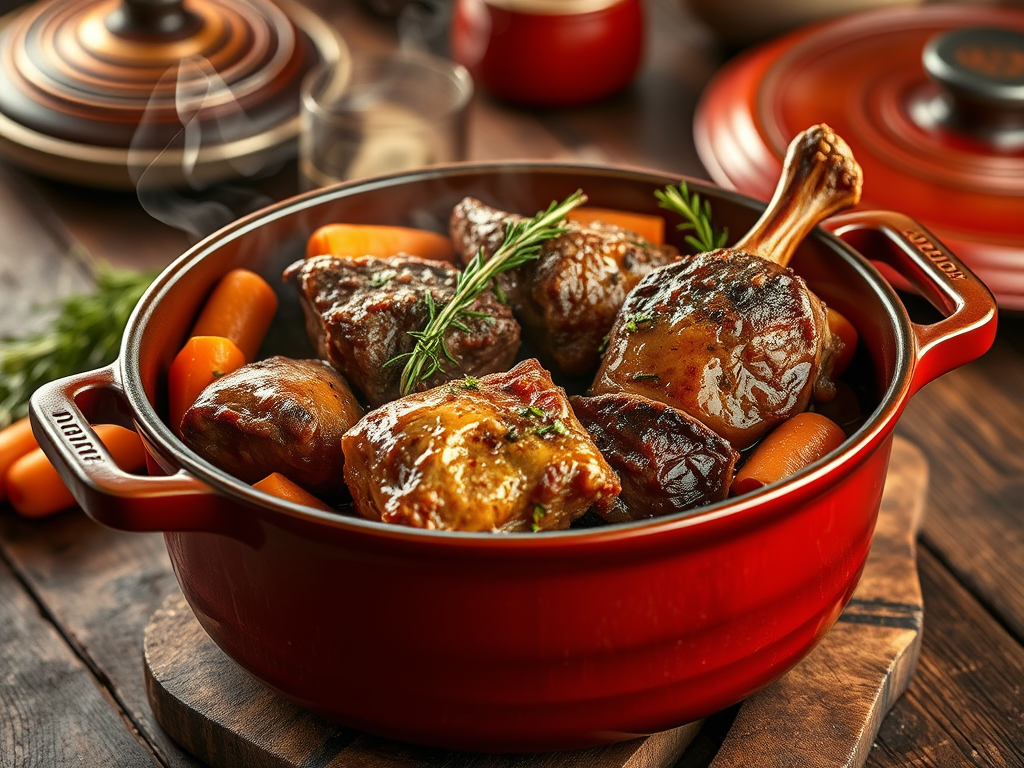
Braising
Braising is one of the oldest and most fundamental cooking techniques, with roots stretching back to ancient times. Let me walk you through its fascinating history and evolution.
Braising originated as a practical method of cooking tough cuts of meat, making them tender and flavorful. The technique emerged independently in multiple cultures. Humans discovered that slow-cooking meat with moisture in a closed environment yielded excellent results.
In medieval Europe, braising became particularly important in French cuisine. The term “braiser” comes from the French word for “hot coals” or “embers.” Dishes were traditionally cooked in covered pots nestled in the embers of a fire. This method allowed for precise temperature control and helped tenderize otherwise tough meats.
The development of the “braisière” happened in 18th century France. This specialized braising pan with a tight-fitting lid marked a significant evolution in the technique. These heavy pots, often made of copper or cast iron, were designed to concentrate flavors and maintain consistent temperature.
Chinese cuisine has its own rich history of braising, known as “红烧” (hong shao) or red cooking. This technique combines braising with distinctive spices. It also includes soy sauce. The practice dates back to at least the Tang Dynasty (618-907 CE). The method was particularly valued for its ability to preserve meat in an era before refrigeration.
In European noble households, braising became linked with refined cooking during the Renaissance. Professional chefs developed complex braising techniques, often using wine and aromatic vegetables to create sophisticated dishes. The famous dish Boeuf à la Mode is a braised beef preparation. It became popular in 17th century France. It remains a classic today.
The Industrial Revolution brought new innovations in cookware, including improved stoves and more standardized braising vessels. This made the technique more accessible to home cooks. In the late 19th century, enameled cast iron cookware developed further and popularized braising. These pots were both durable and easy to clean.
Braising is an important technique in many world cuisines today. It spans dishes from French coq au vin to Italian osso buco. It also includes Mexican barbacoa. Modern chefs have adapted the technique for contemporary kitchens. They use pressure cookers and sous vide methods to achieve similar results more quickly. These methods still respect the fundamental principles that make braising such an effective cooking method.
This slow-cooking technique has endured. It transforms humble ingredients into extraordinary dishes. This demonstrates how cooking innovation often arises from necessity. It also shows the clever use of available resources.
Braising is a classic cooking method. It combines dry and moist heat. This method transforms tough cuts of meat into tender, flavorful dishes. Here’s a concise overview:
- Basic Steps:
- First, sear the meat at high heat to develop a browned crust (dry heat)
- Add liquid to partially cover the meat (usually 1/3 to 1/2 way up)
- Cover and cook at low temperature for an extended period (moist heat)
- Best Used For:
- Tough cuts of meat with lots of connective tissue
- Examples: beef chuck, short ribs, pork shoulder, lamb shanks
- Also works well for certain vegetables like cabbage or leeks
- Key Elements:
- Cooking liquid: stock, wine, beer, or combination
- Aromatics: onions, carrots, celery, garlic
- Temperature: typically 275-325°F (135-165°C)
- Time: usually 2-4 hours, depending on the cut
Meat is typically braised in a flavorful liquid that helps tenderize it and infuse it with flavor. Common braising liquids include:
- Stock/broth (beef, chicken, vegetable)
- Wine (red or white, depending on the meat)
- Beer
- A combination of stock and wine/beer
- Tomato-based liquids
- Cider (especially good for pork)
The liquid usually should come about halfway up the sides of the meat (not fully submerge it). Additional aromatics commonly added to the braising liquid include:
- Onions, carrots, celery (mirepoix)
- Garlic
- Fresh herbs like thyme, rosemary, bay leaves
- Mushrooms
- Citrus zest
For braising meat, you’ll want a pot with these key characteristics:
- Heavy bottom – Distributes heat evenly and prevents hot spots that burn the meat
- Tight-fitting lid – Keeps moisture in during long cooking times
- Oven-safe – Since many braising recipes start on stove top and finish in oven
- Deep enough – To hold the meat and braising liquid with some head space
The most common and ideal pots for braising are:
- Dutch oven (especially enameled cast iron like Le Creuset or Staub)
- Cast iron braiser (shallower than a Dutch oven, good for large cuts)
- Heavy-bottomed stainless steel pot with lid
I’d especially recommend a Dutch oven – it’s incredibly versatile and perfect for braising. The heavy cast iron construction maintains steady heat. The enamel coating makes it easy to clean. It also prevents reactions with acidic ingredients
 D'Lightful Dishes LLC, Personal / Private Chef Services